Sketches

Built to find out

Things we made to answer a question, and tools we built for ourselves and use every day. Pick one to look through its screens here. Each names its stage honestly and the production capability it demonstrates, because that is the only reason they are on a company website rather than in a drawer.

Sheet
A-04
Title
Experiments
Issued for
Information
Drawn by
Snilld

Sport, product designConcept
LoopFloodlight in use
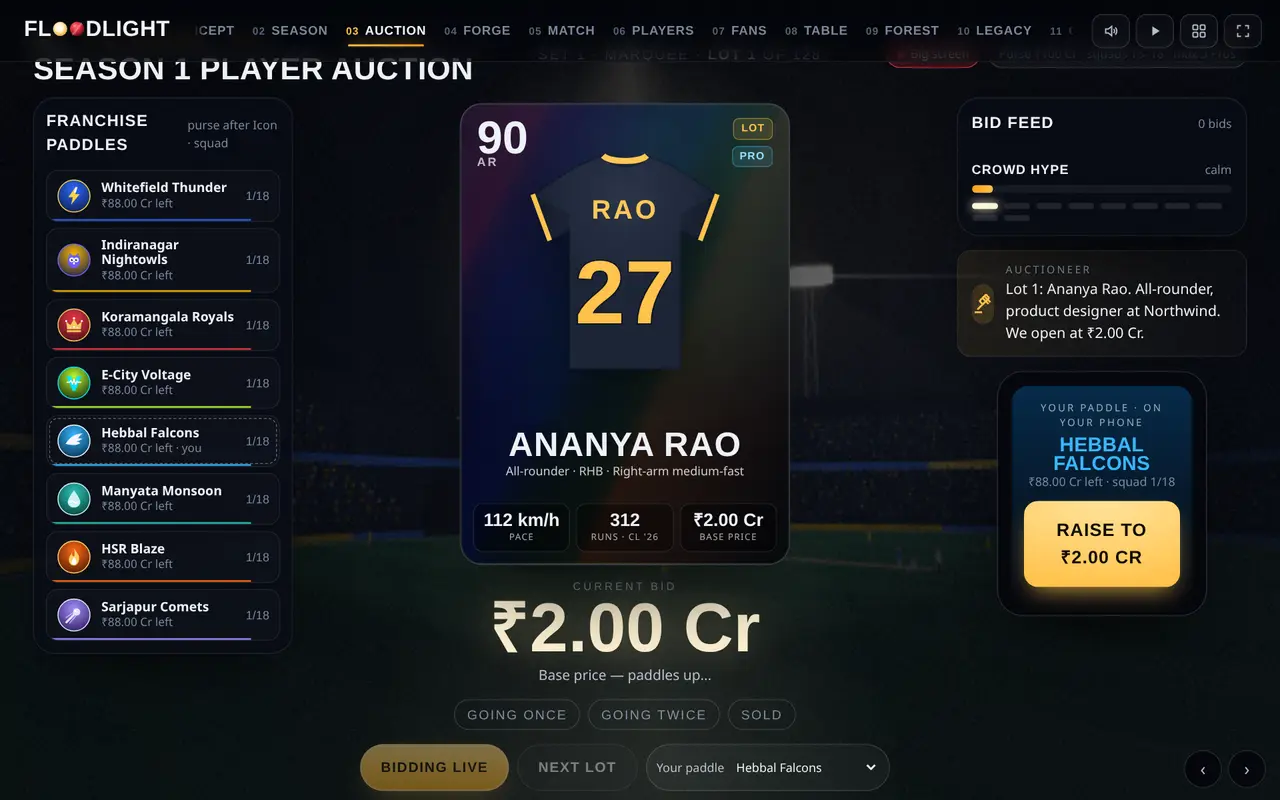
An auction screen: a player card in the centre with the current bid, eight invented franchise paddles down the left and a raise button for the visitor’s paddle.
01 / 03Auction night, bid from your phone
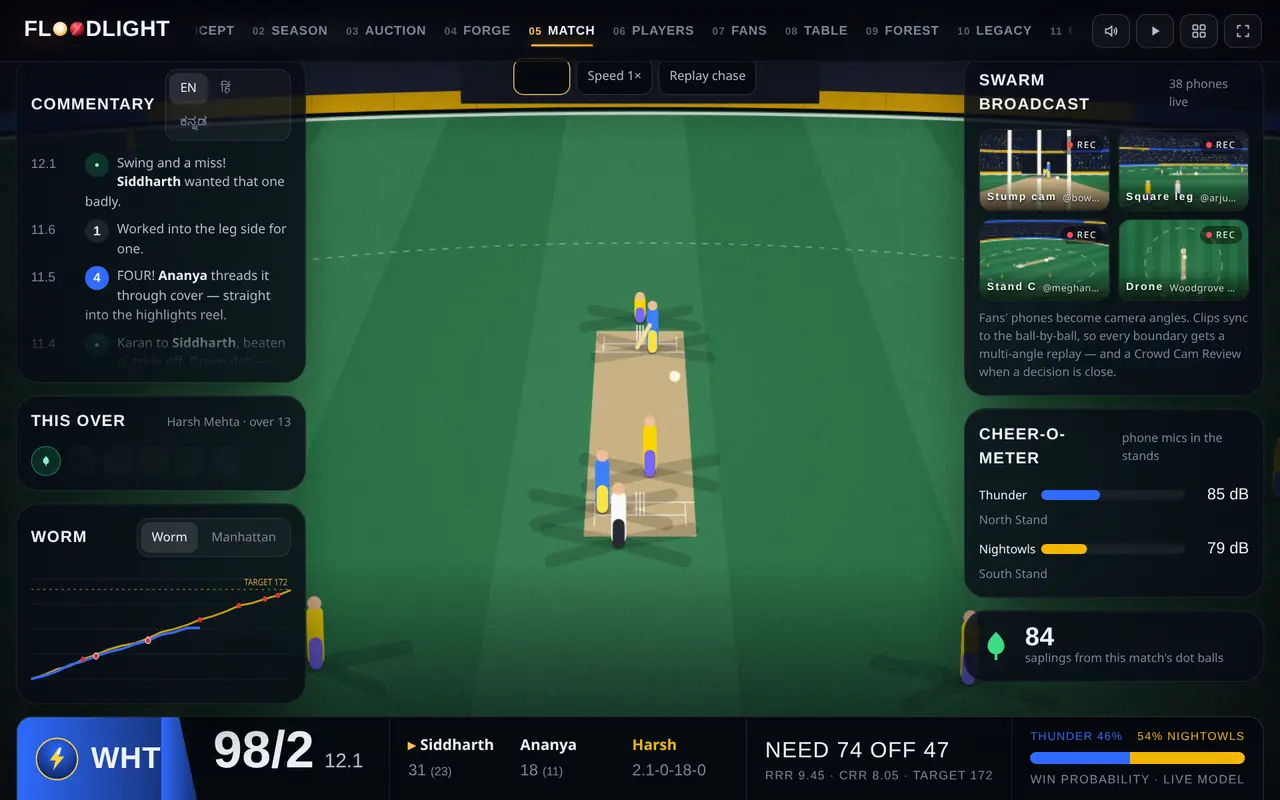
A live match centre: a top-down pitch, ball-by-ball commentary, a run-rate worm, fans’ phone camera angles and a crowd noise meter.
02 / 03Live match, scored by the crowd
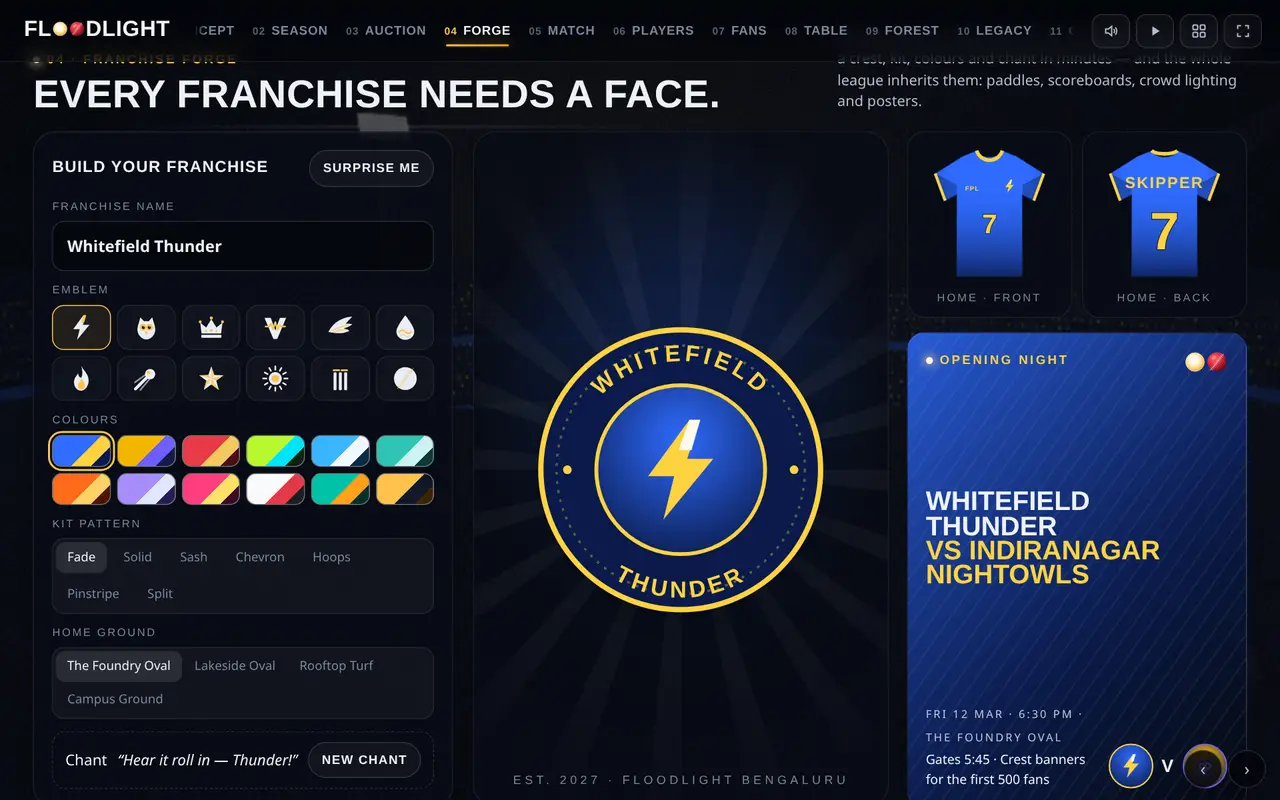
A franchise builder: name, emblem, colours and kit pattern on the left, a crest in the centre, and the jersey and an opening-night poster on the right.
03 / 03Every franchise gets a face

Floodlight, a league in a box

A league format, rulebook and app suite that gives office and community T20 cricket the mechanics that make professional leagues compelling: an auction night, franchises, live scoring from fans’ phones, caps that change hands, and a season record that carries over. A designed, clickable concept. Nothing is built behind it yet.

What it proves

Product design worked from first principles, with the sponsor and the organiser treated as users alongside the players, which is how a community product pays for itself.

Not public. Screens shown on invented data.
Education, Indic languagesPrototype
LoopGurukul in use
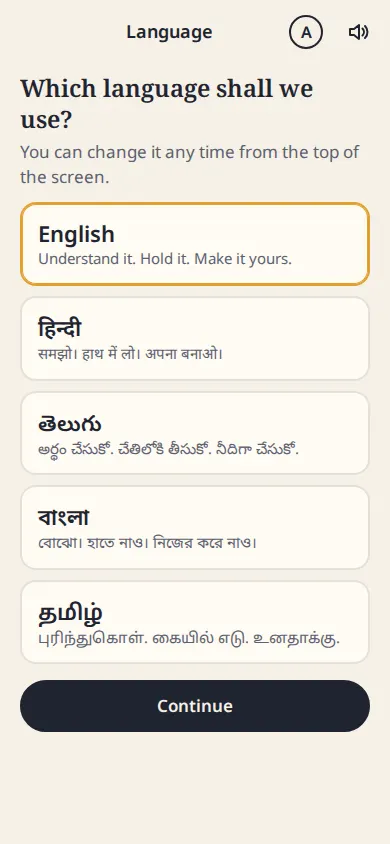
A language picker listing English, Hindi, Telugu, Bengali and Tamil, each written in its own script with a one-line motto.
01 / 05Five languages, each in its own script
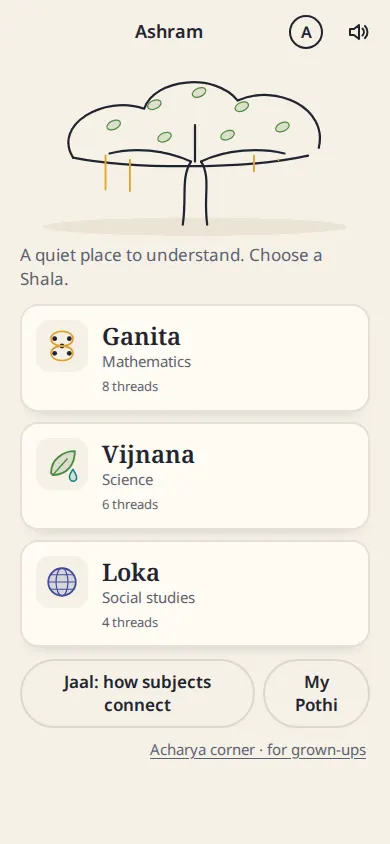
The home screen: a line drawing of a banyan tree above three subjects, Ganita for mathematics, Vijnana for science and Loka for social studies.
02 / 05Three subjects, no scores anywhere
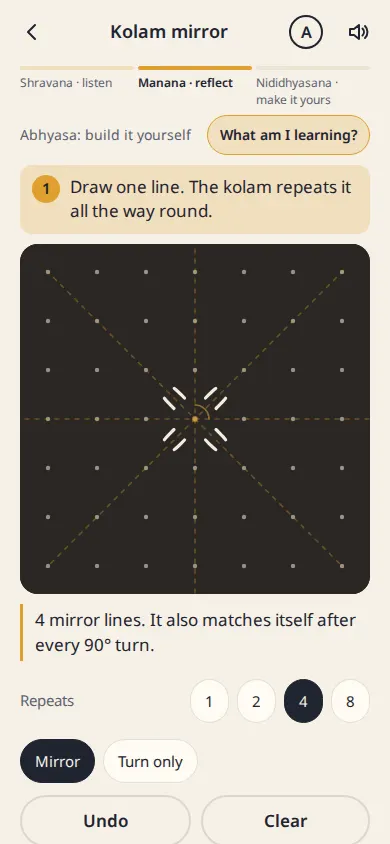
A kolam drawing grid with four dashed mirror lines. The child draws one stroke and it repeats around the centre.
03 / 05Symmetry, by drawing a kolam
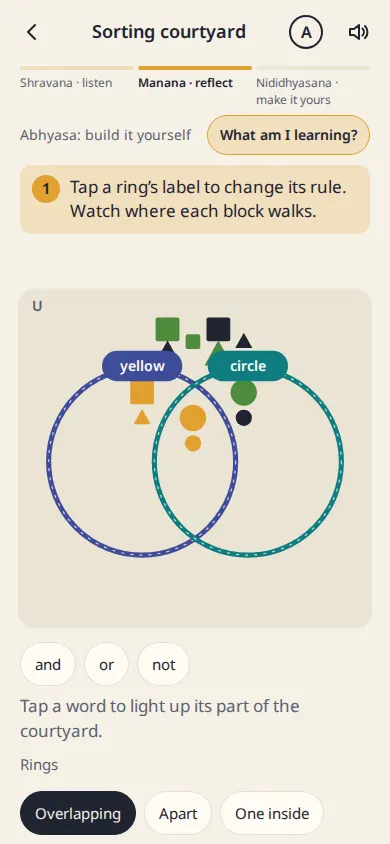
Two overlapping rings labelled yellow and circle, with coloured shapes sorted into and between them, and buttons for and, or and not.
04 / 05Sets, by sorting shapes into rings
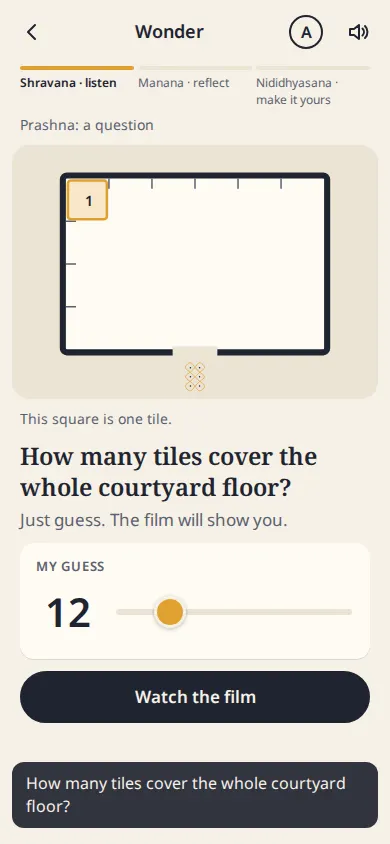
A courtyard drawn as an empty rectangle with one tile in the corner, asking how many tiles cover the floor, with a slider to guess.
05 / 05Every lesson opens with a question

Gurukul, a calm learning companion

A Class 5 companion for mathematics, science and social studies in English, Hindi, Telugu, Bengali and Tamil. Children learn by handling on-screen manipulatives rather than typing into a prompt, and there are no points, streaks or timers. Everything stays on the device, with no telemetry.

What it proves

Interfaces that work in Indian languages and scripts, and products for a vulnerable audience where privacy is a design decision rather than a policy page.

Voice, public infrastructureProof of concept

Voice notes in any Indian language

A WhatsApp voice note in one Indian language is transcribed, translated and answered as speech in another, using Bhashini, the Government of India’s language infrastructure, rather than a foreign model provider.

What it proves

Voice access for people who will never fill in a form, and the residency story a public-sector or citizen-facing service needs before it can use speech at all.

Not public. Described rather than shown.

Delivery, operationsIn use
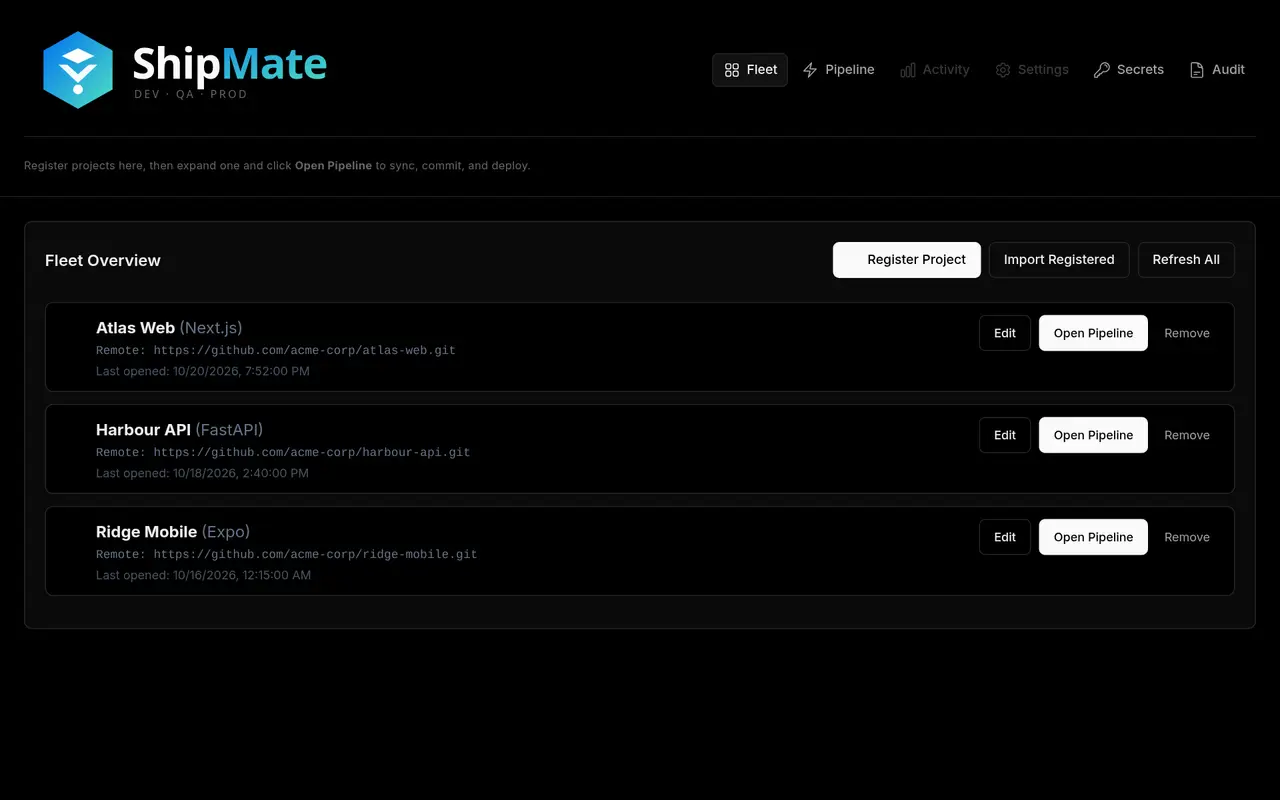
A fleet overview listing three invented projects, each with its stack, its repository and when it was last opened.
01 / 04Every project, one screen
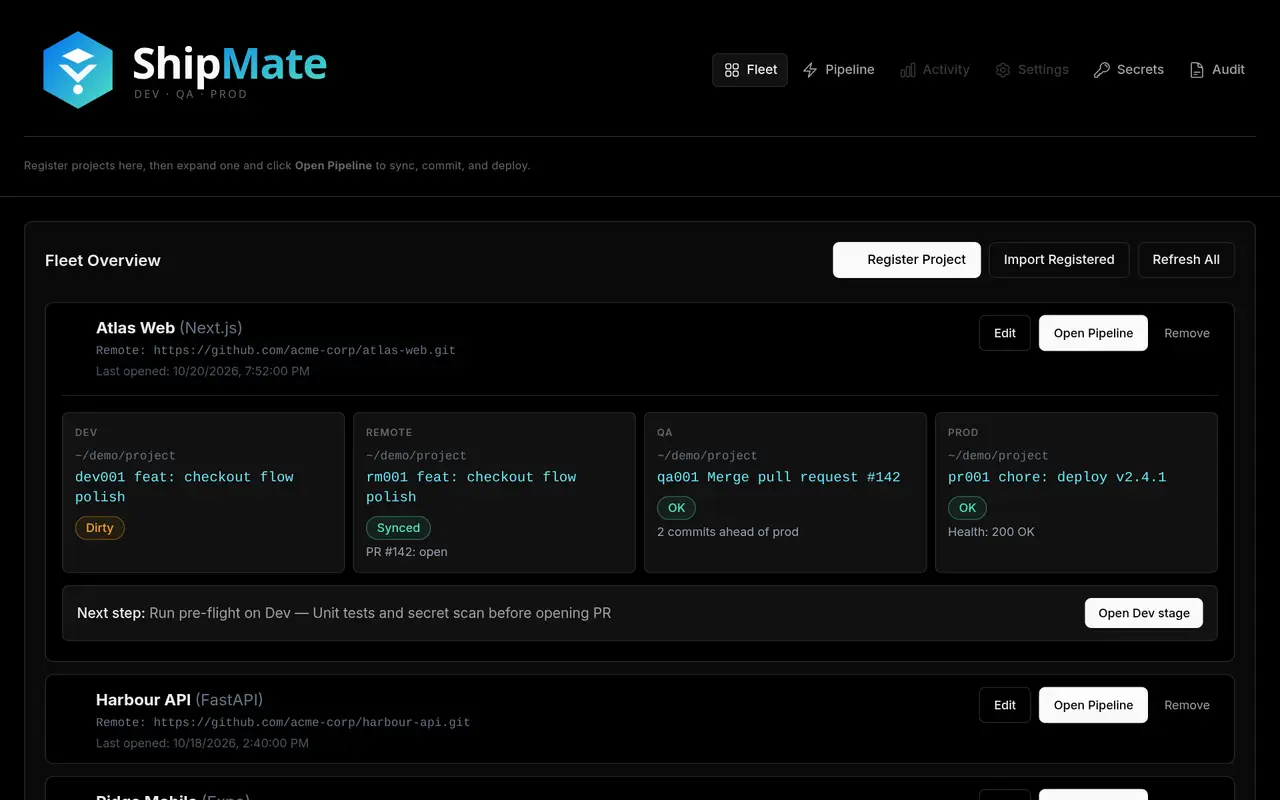
One project expanded into four columns, development, remote, QA and production, each showing its latest commit and health.
02 / 04Which commit is where
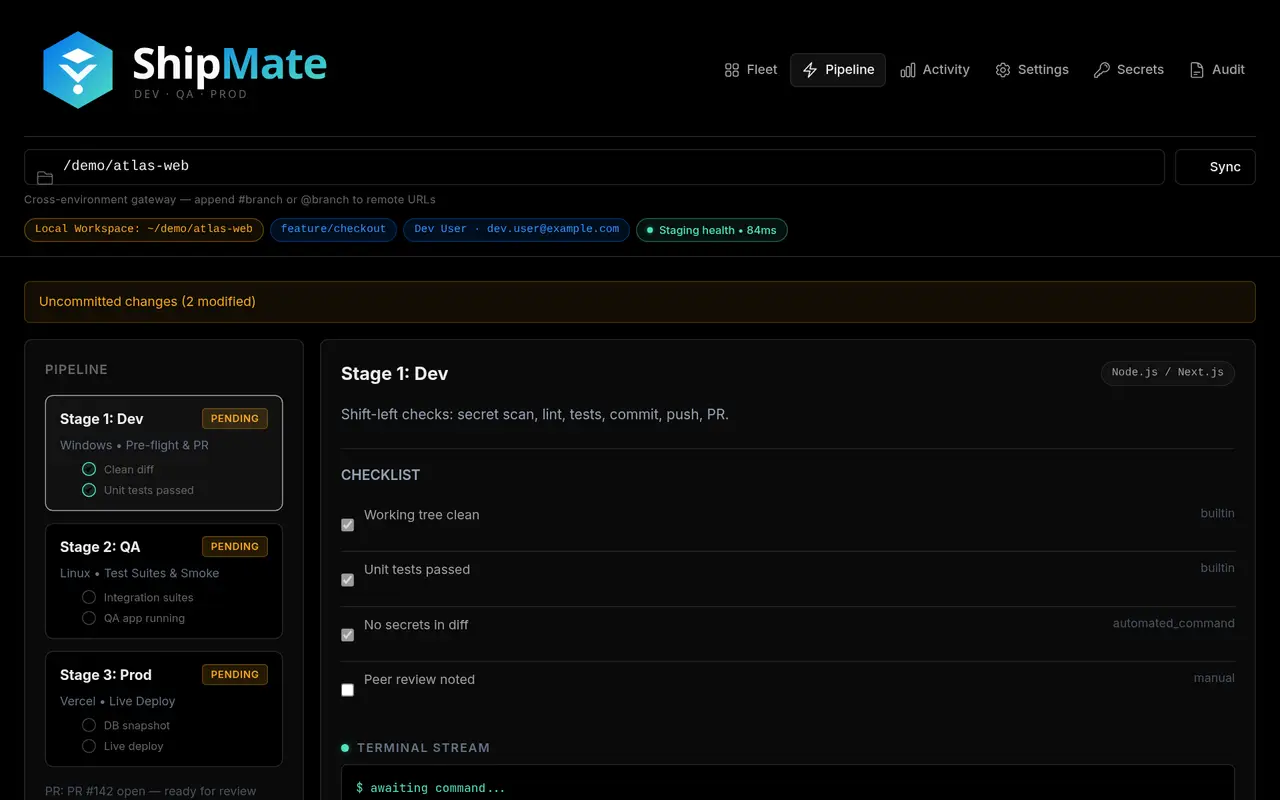
A pipeline view: three stages down the left, and a checklist for the development stage covering a clean tree, tests and a secret scan.
03 / 04Checks before anything moves
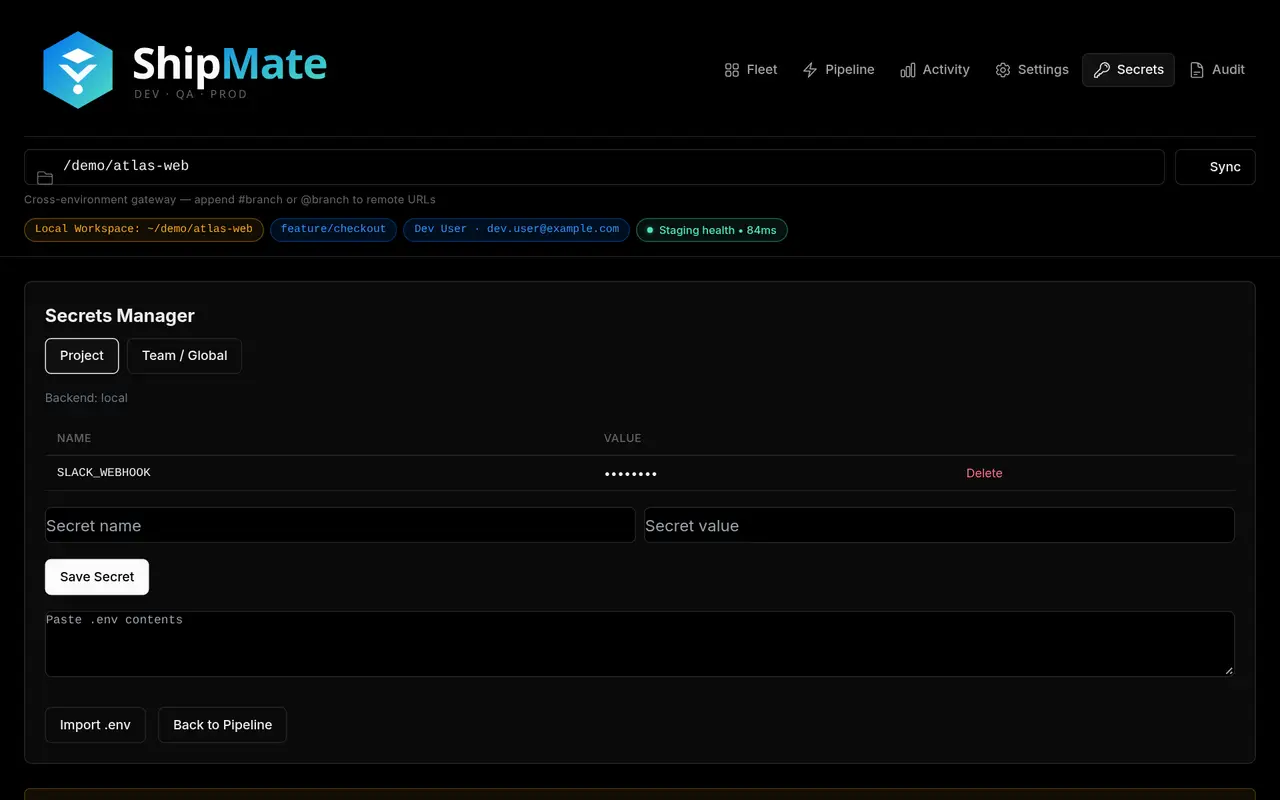
A secrets manager with one masked webhook value and a field to import an environment file.
04 / 04Secrets stay masked

ShipMate, our delivery dashboard

One screen showing every project we run across development, review, QA and production: which commit is where, whether the live service is healthy, and what is waiting to be promoted. Refreshing the screen never pulls code, and syncing sets aside uncommitted work rather than overwriting it.

What it proves

The operational habit behind “production, or it does not count”: we can say what is running for a client, and roll it back.

Not public. Screens shown on invented data.
Sales, agentsIn use
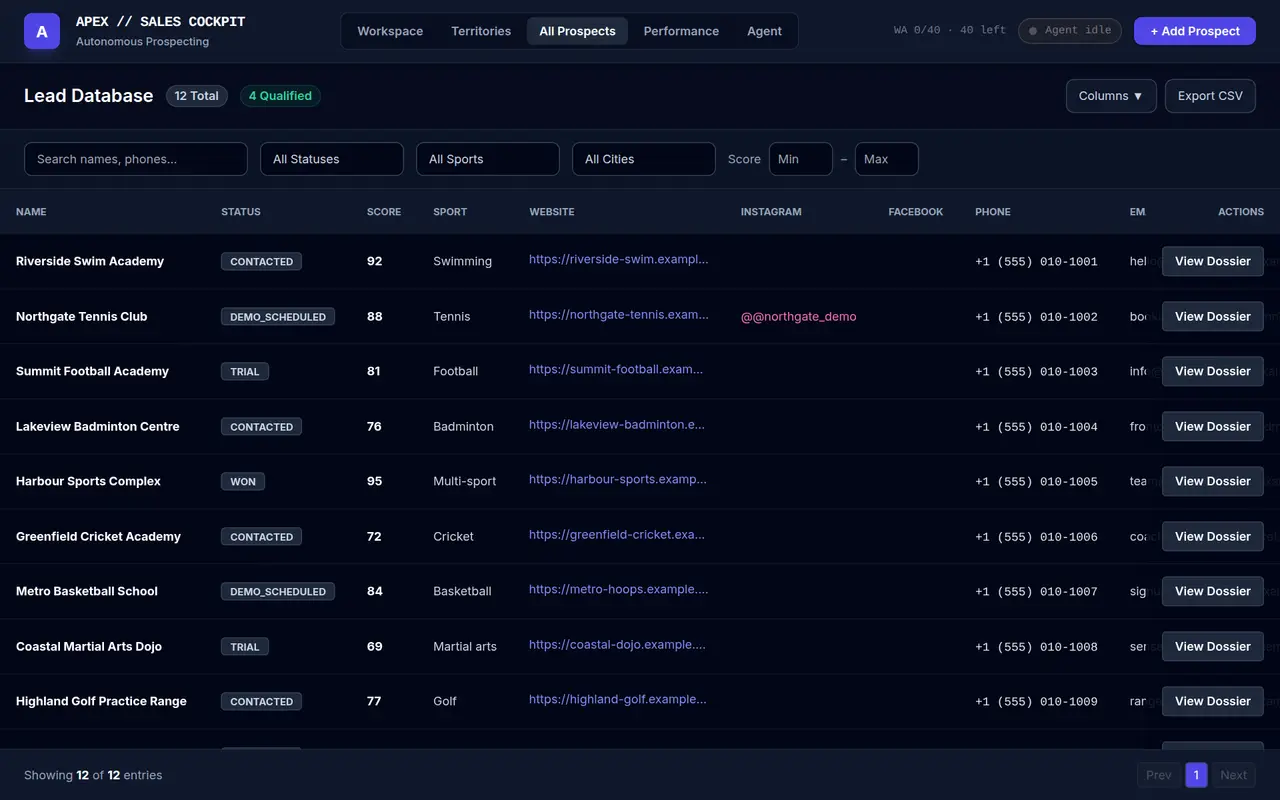
A lead database of invented sports academies, each with a status, a score, its sport and contact columns.
01 / 02Every venue found, scored
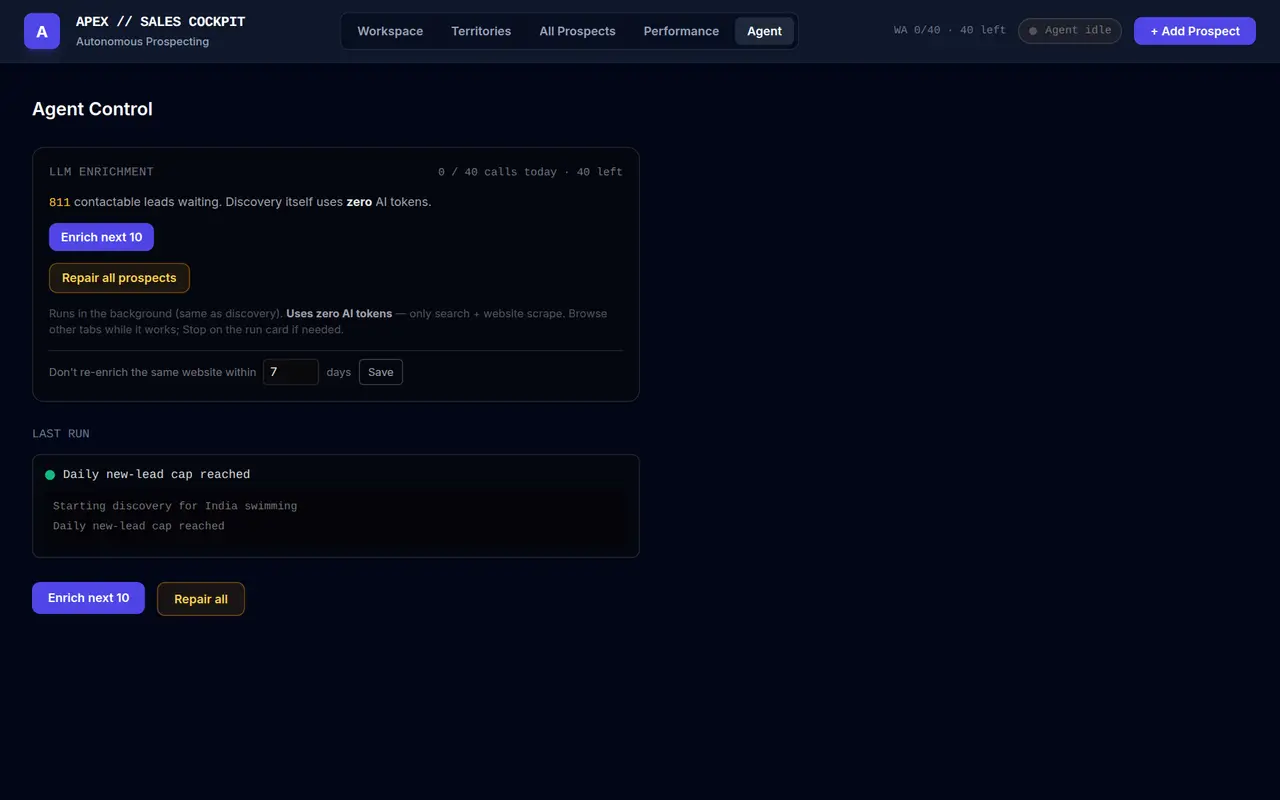
An agent control panel showing forty model calls a day, all forty unused, and a note that discovery itself uses no model calls.
02 / 02The model budget, in plain view

A prospecting cockpit we run on ourselves

Finds sports academies and clubs from map and public search data, scores them, and gives one person a daily queue of openers grounded in what each venue has actually published. Discovery costs no model calls at all; a model is used only on leads someone chooses to research, inside a fixed daily budget.

What it proves

Agents with a cost ceiling, where the expensive step runs only when a person decides it is worth it.

Not public. Screens shown on invented data.
Events, multi-tenantPrototype
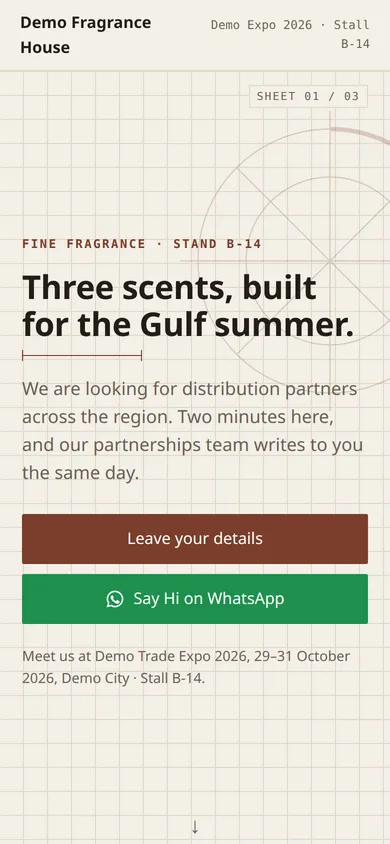
The first screen a visitor sees after scanning the stand’s QR code: an invented fragrance house, its stall number at an invented show, a one-line promise and two buttons, one to leave details and one to say hi on WhatsApp.
01 / 04The same engine, with an invented exhibitor
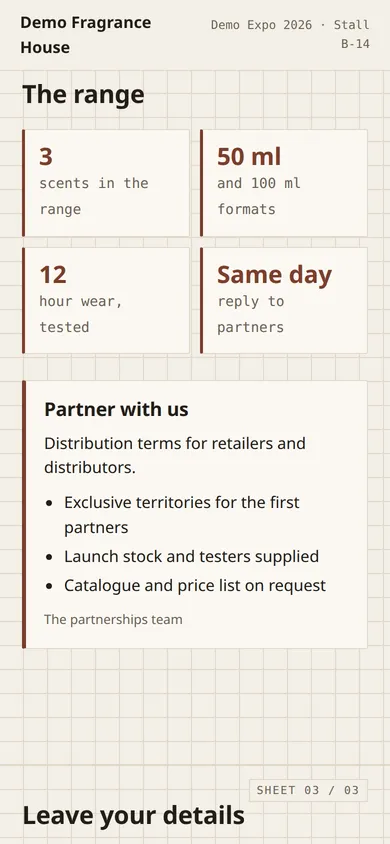
Short cards about the range and a partner offer, each a few words long so a visitor can take them in at a glance.
02 / 04The story, in a few short cards
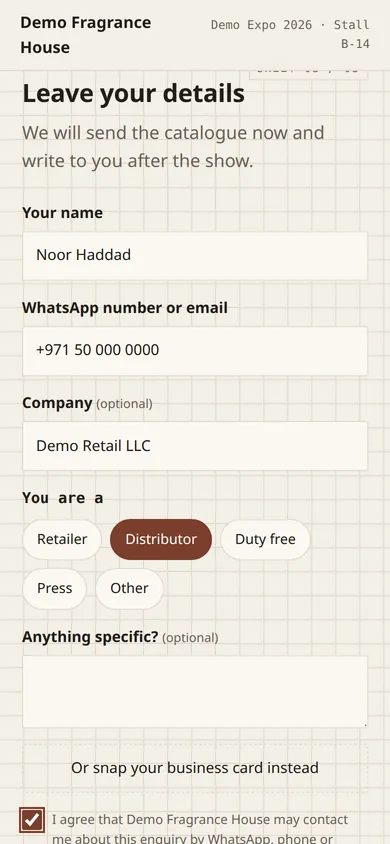
The lead form filled in by an invented visitor: a name, a phone number, a company, and the type of buyer chosen from a row of chips, with an option to photograph a business card instead.
03 / 04A short form, or a photo of a card
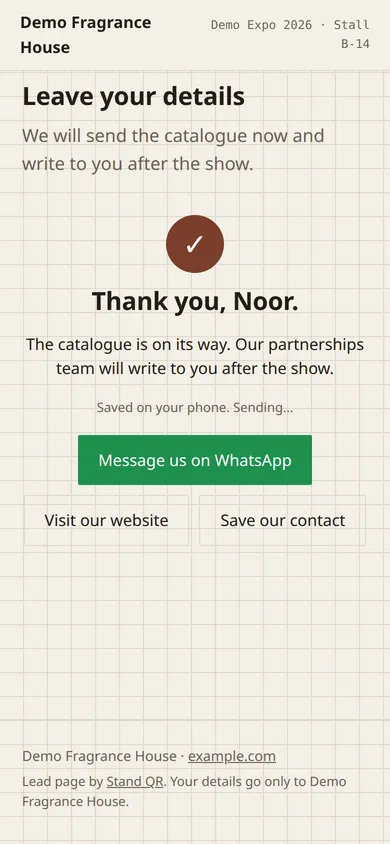
The thank-you screen, which tells the visitor the catalogue is on its way and that their details are saved on the phone and being sent.
04 / 04Saved on the phone, sent when the signal returns

Stand QR, one lead engine for many exhibitors

The engine behind our trade-show stand work, generalised so many exhibitors at the same show can each run a branded phone experience and receive their own leads, with consent wording that names the exhibitor who will make contact.

What it proves

Turning one client’s project into a reusable product: per-tenant branding and data from a single deployment.

Not public. Screens shown on invented data.
Decision supportIn use
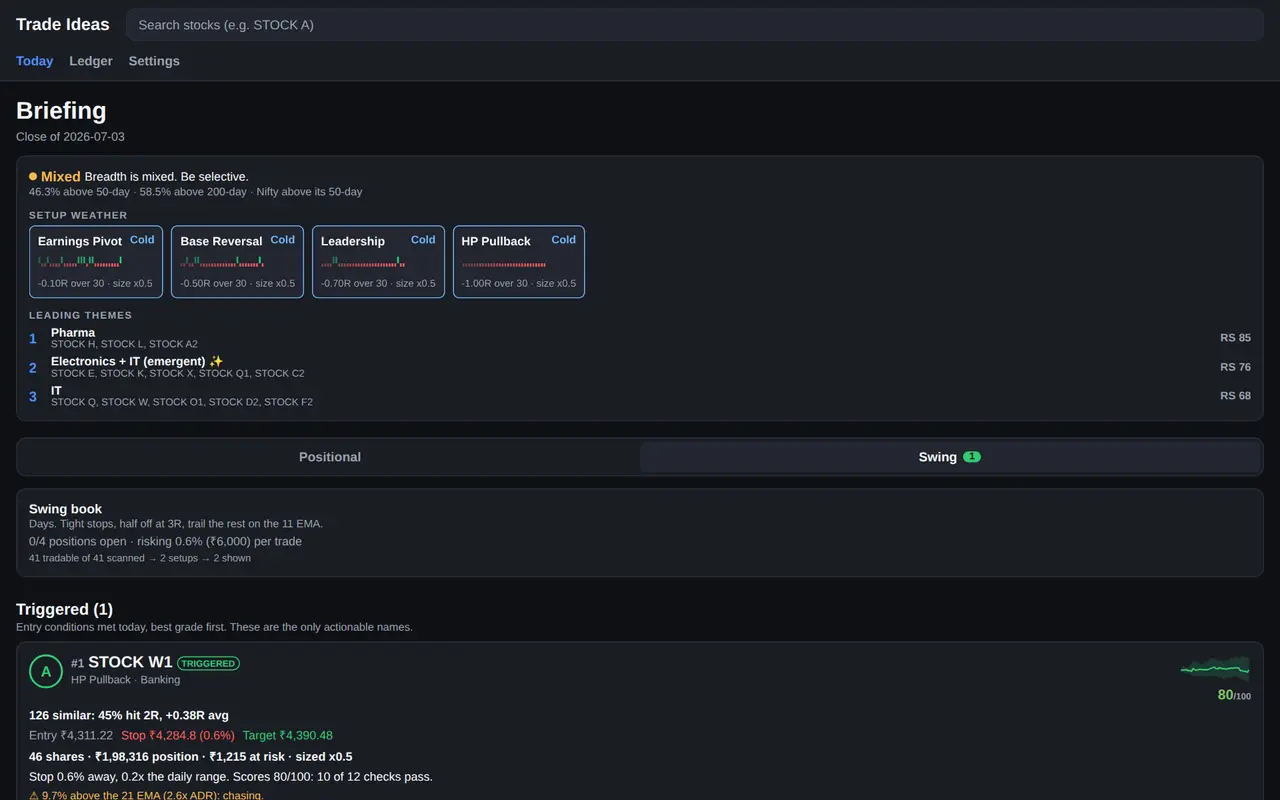
The evening briefing: market breadth, how each setup has been performing lately, leading sectors, and one triggered idea with its grade and plan.
01 / 04The evening briefing
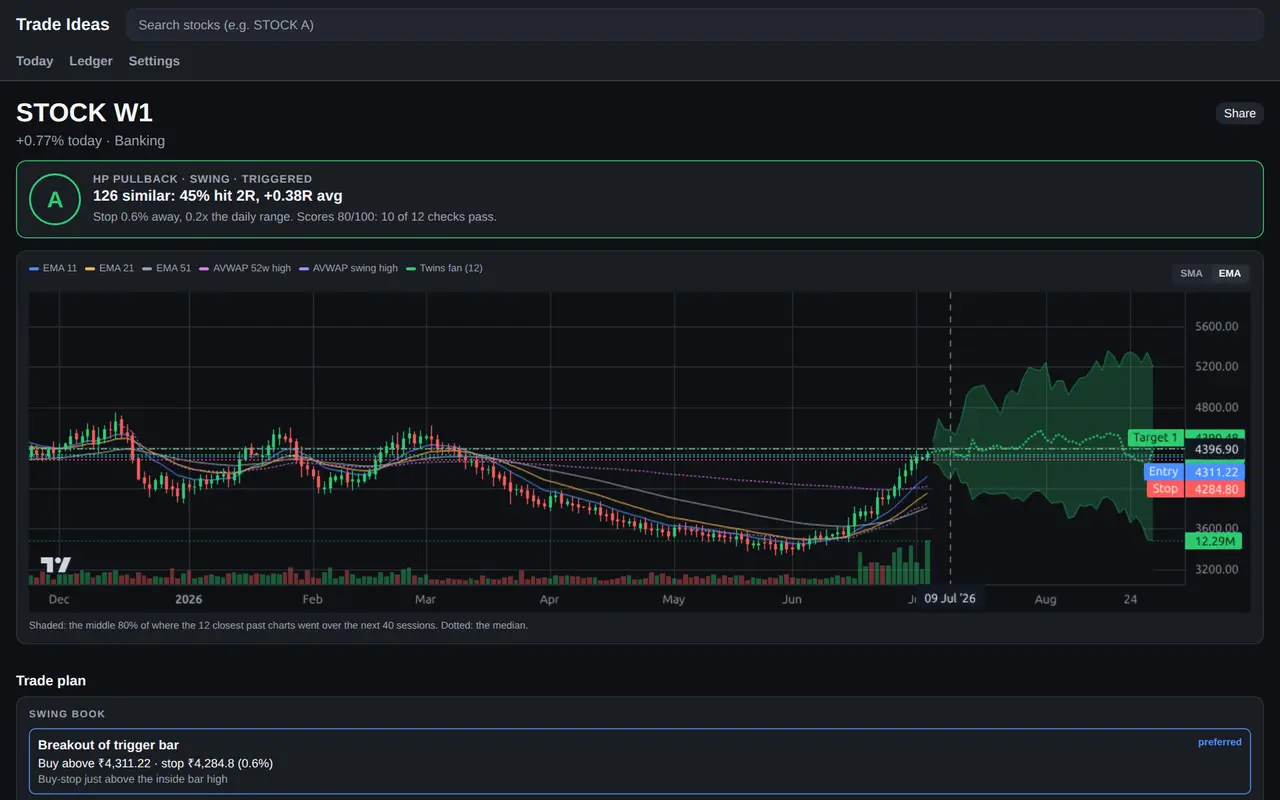
A price chart for one anonymised stock, with entry, stop and target marked, and a shaded fan showing where the closest past charts went next.
02 / 04Where similar charts went next
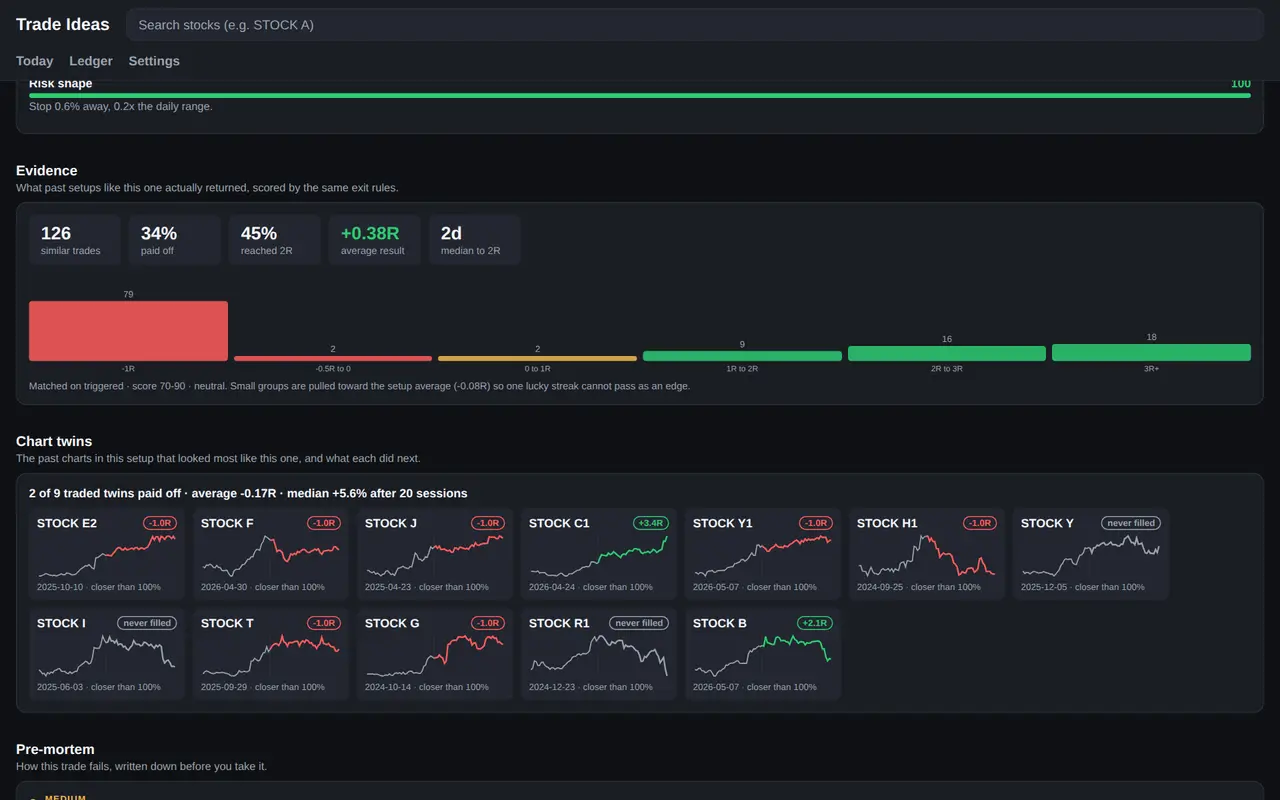
An evidence panel: how many similar past signals there were, how many paid off, a histogram of outcomes, and a grid of the past charts it matched.
03 / 04The evidence, including the losses
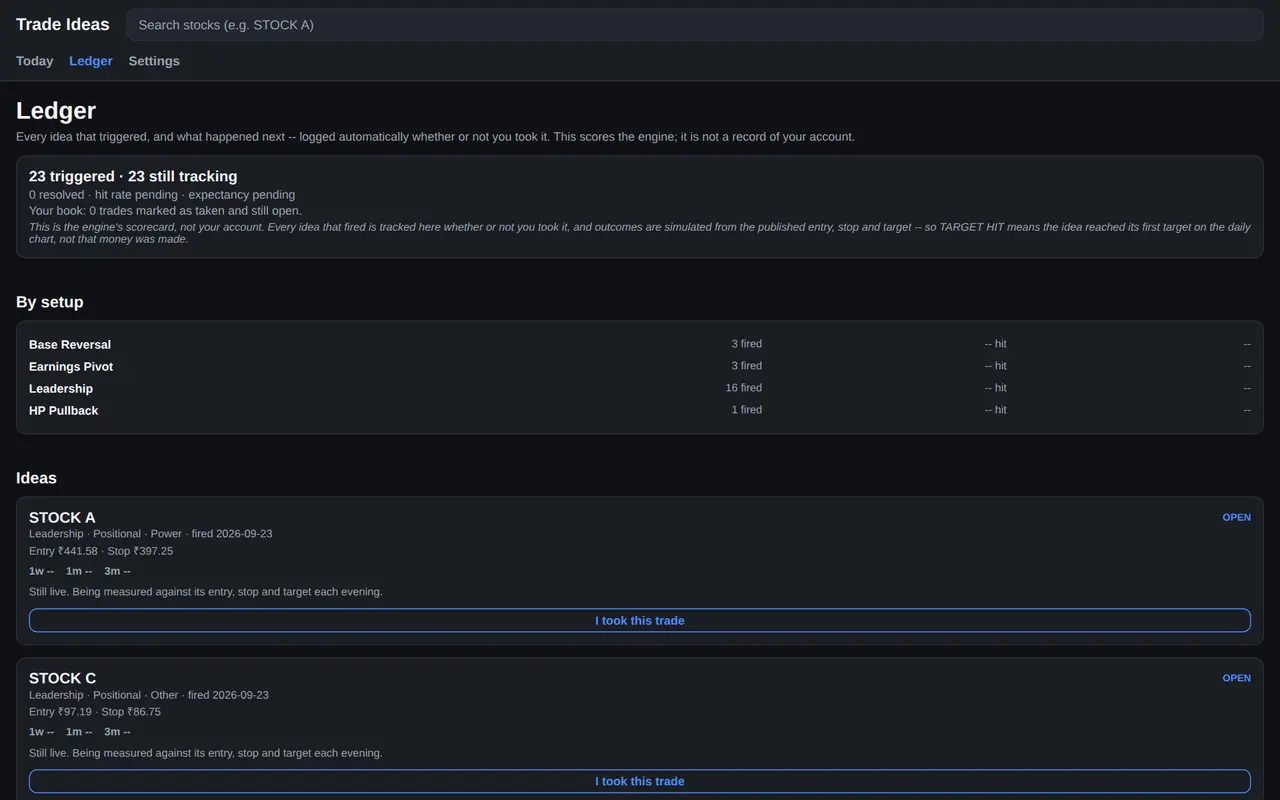
A ledger of every idea that triggered, with how many fired per setup and each open idea being measured against its entry and stop.
04 / 04It keeps score on itself

An evening market scan that keeps score on itself

After the market closes, it screens listed Indian equities against a small set of deliberately different setups and sends a short list to a phone. Each idea carries how similar past signals actually played out and a written note of how it could fail, and every idea it raises is logged and marked against what happened next. An educational screen for our own use, not investment advice.

What it proves

Decision support that shows its evidence and publishes its own track record, rather than asking to be trusted.

Not public. Screens shown on invented data.
Curious about one of these?

If any of this looks close to a problem you have, the fastest route is a short conversation followed by a two-week prototype against your own files.

Get in touch